Modern warehousing is no longer just about stacking products on shelves and shipping them when orders arrive. Today’s warehouses operate like carefully choreographed systems, where inventory accuracy, fulfillment speed, logistics visibility, and warehouse efficiency all need to work together. Choosing the right warehousing tools can determine whether a business scales smoothly or struggles with stockouts, delays, and rising costs.
TLDR: Warehousing tools can be grouped into four major categories: inventory management, fulfillment systems, logistics platforms, and warehouse management solutions. Inventory tools focus on stock visibility, fulfillment tools manage order processing, logistics tools coordinate transportation, and warehouse management systems oversee the physical flow of goods inside the warehouse. The best choice depends on business size, order volume, product complexity, and how much automation is needed. Many growing companies eventually benefit from combining several tools into one connected workflow.
Understanding the Main Types of Warehousing Tools
Warehousing technology is often discussed as if it were one single category, but in practice it includes several different types of software and systems. Each tool solves a related but distinct problem. Some help a business know what is in stock, while others help teams decide where to store it, how to pick it, when to ship it, and which carrier should deliver it.
The four most common categories are:
- Inventory management tools, which track stock quantities, product movements, and reorder needs.
- Fulfillment solutions, which manage order processing, picking, packing, and shipping preparation.
- Logistics platforms, which coordinate carriers, freight, delivery routes, and shipping visibility.
- Warehouse management systems, often called WMS platforms, which control the broader activities inside a warehouse.
Although these categories overlap, understanding the differences makes it much easier to select the right tool for your operation.
Inventory Management Tools: Knowing What You Have
Inventory management tools are the foundation of an efficient warehouse. Their main purpose is simple: they tell you what products you have, how many units are available, where they are located, and when you need to reorder. However, the best inventory tools go far beyond basic counting.
A good inventory system can support real-time stock tracking, barcode scanning, lot numbers, serial numbers, expiration dates, reorder alerts, forecasting, and stock valuation. For retailers, wholesalers, manufacturers, and ecommerce brands, this visibility is essential. Without it, teams may sell products they do not actually have or overorder items that are already sitting in storage.

Key features of inventory management tools include:
- Stock level monitoring: Track how much inventory is available across one or multiple locations.
- Reorder points: Automatically alert teams when inventory drops below a defined threshold.
- Barcode and QR code support: Improve accuracy during receiving, transfers, and stock counts.
- Batch and lot tracking: Useful for food, pharmaceuticals, cosmetics, and regulated goods.
- Inventory forecasting: Estimate future demand based on sales history and seasonal patterns.
Inventory management tools are especially valuable for small and midsize businesses that need better stock control but may not yet require a full warehouse management system. They help reduce human error, improve purchasing decisions, and create a more reliable view of available products.
However, an inventory tool alone may not fully manage the physical workflow of a warehouse. It can tell you that an item exists and where it should be, but it may not optimize picking routes, labor allocation, or dock scheduling. That is where more advanced fulfillment and warehouse management tools come in.
Fulfillment Solutions: Turning Orders Into Shipments
Fulfillment tools focus on the process that begins when a customer places an order and ends when the package is ready to leave the warehouse. For ecommerce businesses in particular, fulfillment speed and accuracy can directly shape customer satisfaction. A late or incorrect shipment is not just an operational issue; it is a brand experience problem.
Fulfillment software typically connects with sales channels such as online stores, marketplaces, point-of-sale systems, and wholesale portals. Once an order enters the system, the fulfillment tool helps warehouse teams pick the right products, pack them correctly, generate labels, and update the order status.
Common fulfillment features include:
- Order routing: Send orders to the best warehouse or fulfillment center based on stock availability and delivery location.
- Pick lists: Create efficient instructions for warehouse staff to locate ordered items.
- Packing workflows: Guide teams on packaging requirements, inserts, gift notes, or special handling.
- Shipping label generation: Print carrier labels and update tracking information automatically.
- Returns support: Manage return merchandise authorizations, restocking, and exchanges.
In smaller warehouses, fulfillment may be managed manually with spreadsheets and printed orders. But as order volume grows, manual processes become risky. Teams may pick the wrong item, miss a shipping cutoff, or lose track of partial shipments. Fulfillment tools reduce these risks by standardizing the order workflow.
For companies selling across multiple channels, fulfillment software can be especially powerful. It prevents overselling, consolidates orders into a single dashboard, and helps ensure that inventory updates flow back to each sales platform. The result is a smoother experience for both warehouse staff and customers.
Logistics Platforms: Managing Movement Beyond the Warehouse
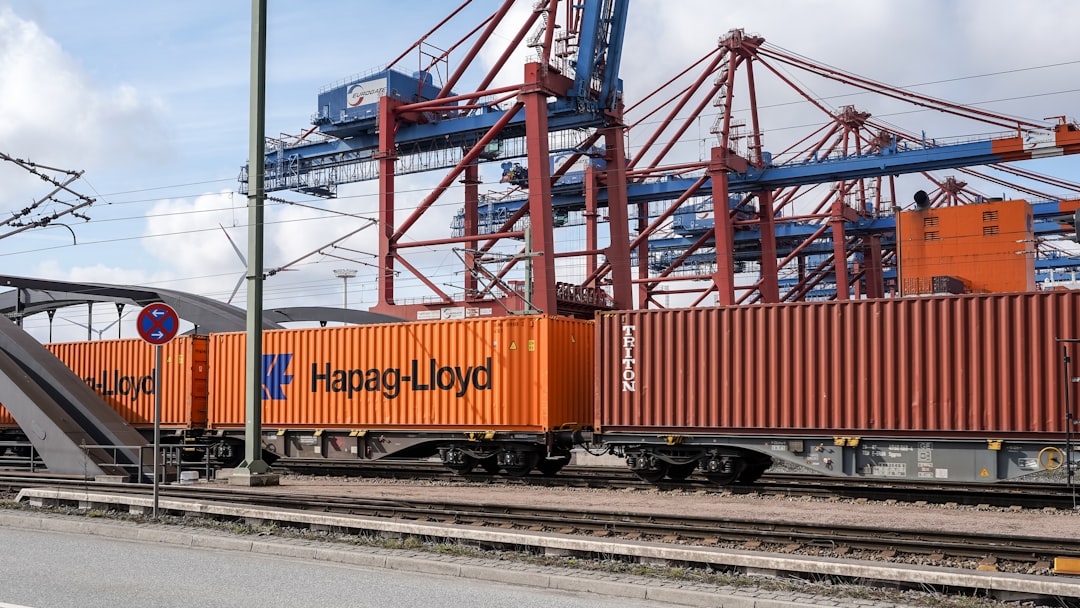
While fulfillment tools prepare orders for shipment, logistics platforms manage the broader movement of goods. This may include parcel shipping, freight forwarding, carrier selection, route planning, customs documentation, delivery tracking, and transportation cost analysis.
Logistics tools are critical because the warehouse is only one part of the supply chain. Products may arrive from overseas suppliers, move between distribution centers, travel to retail stores, or ship directly to end customers. Each movement has a cost, timeline, and risk profile.
Typical logistics platform capabilities include:
- Carrier rate comparison: Compare shipping prices and delivery times from multiple carriers.
- Transportation management: Plan freight movements, book shipments, and manage carrier relationships.
- Tracking visibility: Monitor shipments from dispatch to delivery.
- Route optimization: Improve delivery efficiency for local fleets or regional distribution.
- Customs and compliance documents: Support international shipping requirements.
Logistics platforms are especially important for businesses with complex shipping needs. For example, a company shipping bulky furniture must think about freight classification, delivery appointments, and damage risk. A food distributor may need temperature-controlled transport. A global ecommerce brand must handle customs, duties, and international tracking updates.
The main benefit of logistics technology is visibility and control. Instead of reacting to delays after customers complain, teams can identify issues earlier. They can compare carrier performance, negotiate better rates, and choose shipping methods that balance cost with service quality.
However, logistics tools usually do not manage the detailed work happening inside the warehouse. They are strongest once goods are moving between locations or leaving the facility. For internal storage, picking, replenishment, and labor workflows, businesses often need a warehouse management system.
Warehouse Management Systems: Controlling the Whole Operation
A warehouse management system, or WMS, is the most comprehensive type of warehousing tool. It manages the physical flow of goods through the warehouse, from receiving and putaway to picking, replenishment, packing, cycle counting, and shipping coordination.
If inventory software answers the question “What do we have?”, a WMS answers “How should we move it?” It helps warehouse teams make better decisions about product placement, picking paths, labor use, and space utilization.
Core WMS functions often include:
- Receiving: Record incoming goods, verify quantities, and inspect shipments.
- Putaway optimization: Recommend the best storage location based on item size, demand, category, or temperature requirements.
- Bin and location management: Track precise warehouse locations such as aisles, racks, shelves, and bins.
- Wave and batch picking: Group orders to reduce walking time and increase productivity.
- Replenishment: Move stock from bulk storage to pick locations before shortages occur.
- Cycle counting: Count small sections of inventory regularly instead of shutting down for full physical counts.
- Labor tracking: Measure productivity and assign tasks more efficiently.
A WMS is often the right choice for larger warehouses, high-volume ecommerce operations, third-party logistics providers, manufacturers, and distributors with complex storage requirements. It can significantly improve accuracy, reduce wasted motion, and increase throughput.

The tradeoff is complexity. A WMS can require more planning, setup, training, and process discipline than a simpler inventory tool. Businesses need to define warehouse locations, item rules, user permissions, workflows, and integrations. But when implemented well, a WMS becomes the operational brain of the warehouse.
How These Tools Compare
The easiest way to compare warehousing tools is to look at their main focus. Inventory tools manage stock data. Fulfillment tools manage orders. Logistics tools manage transportation. Warehouse management systems manage internal warehouse execution.
| Tool Type | Main Focus | Best For | Typical Limitation |
|---|---|---|---|
| Inventory Management | Stock visibility and control | Small to midsize businesses needing accurate inventory counts | Limited warehouse workflow optimization |
| Fulfillment Solutions | Order processing, picking, packing, and shipping preparation | Ecommerce brands and multichannel sellers | May not manage broader warehouse layout or labor strategy |
| Logistics Platforms | Transportation, carriers, freight, and delivery visibility | Companies with complex shipping or distribution needs | Usually focused outside the warehouse |
| Warehouse Management Systems | End-to-end warehouse execution | High-volume, complex, or multi-location warehouse operations | More complex implementation and training |
In many cases, businesses do not choose just one. A growing ecommerce company might use an inventory management system connected to a fulfillment platform and a shipping tool. A third-party logistics provider may use a WMS integrated with transportation management software. The best setup is usually the one that eliminates duplicate data entry and allows information to move smoothly between systems.
Choosing the Right Warehousing Tool
Before choosing software, businesses should examine their current pain points. Technology works best when it solves a clearly defined operational problem. Buying a complex system without understanding the workflow can make operations more confusing, not less.
Important questions to ask include:
- Are inventory counts frequently inaccurate?
- Are orders delayed because picking and packing are inefficient?
- Do shipping costs feel unpredictable or too high?
- Is the warehouse running out of space despite having unused capacity?
- Are employees relying heavily on spreadsheets, paper lists, or memory?
- Does the business sell through multiple channels or store products in multiple locations?
If the main issue is poor stock visibility, an inventory tool may be enough. If the problem is order speed, a fulfillment solution may deliver the fastest improvement. If shipping costs and carrier performance are the concern, logistics software is the better starting point. If the warehouse itself feels disorganized, slow, or difficult to scale, a WMS may be the most strategic investment.
The Role of Integration and Automation
One of the biggest trends in warehousing technology is integration. Businesses increasingly want tools that connect with ecommerce platforms, accounting systems, enterprise resource planning software, point-of-sale systems, carrier networks, robotics, and analytics dashboards.
Automation is also becoming more accessible. Even warehouses that are not ready for robots can automate practical tasks such as reorder alerts, shipping label creation, order routing, low-stock notifications, and performance reporting. More advanced operations may use conveyor systems, automated storage and retrieval systems, mobile scanning devices, or autonomous mobile robots.
Still, automation should support good processes rather than hide bad ones. A warehouse with messy product data, unclear locations, and inconsistent receiving practices will not become efficient simply by adding software. The best results come when businesses combine strong operational discipline with the right technology.
Final Thoughts
Warehousing tools are most effective when they are chosen with a clear understanding of what each system is designed to do. Inventory management tools improve stock accuracy, fulfillment solutions help orders move quickly, logistics platforms control transportation, and warehouse management systems coordinate the full internal operation.
For a small business, the right first step might be simple inventory tracking with barcode scanning. For a fast-growing ecommerce brand, the priority may be fulfillment automation and carrier integrations. For a distributor or third-party logistics provider, a robust WMS connected to logistics software may be essential.
Ultimately, the goal is not just to add more technology. The goal is to create a warehouse that is accurate, flexible, visible, and ready to scale. When the right tools work together, warehousing becomes less of a bottleneck and more of a competitive advantage.